Written by Rachel Kohn
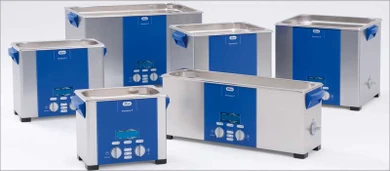
One of the purchasing decisions to be made when considering an ultrasonic cleaner is the frequency at which it operates. Ultrasonic frequency is the term applied to the ultrasonic energy provided by ultrasonic generators and delivered to the transducers affixed to the cleaning tank. It is expressed in kilohertz (kHz).
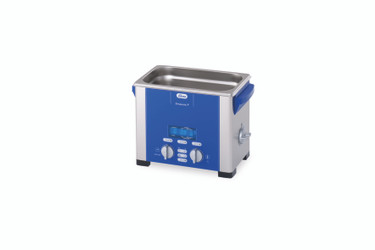
Ultrasonic cleaners such as those manufactured by Elma and available from Tovatech are available in several frequencies, ranging 25 kHz to 130 kHz. Several units offer a choice between two different frequencies, examples being the Flex and TI-H lines that operate at either 25/45 kHz or 35/130 kHz, and the P line at 37/80 kHz.
Read the rest of this entry »
Written by Bob Sandor
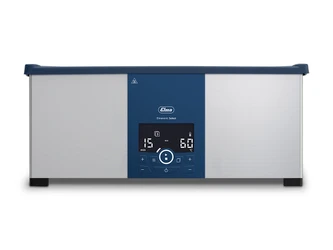
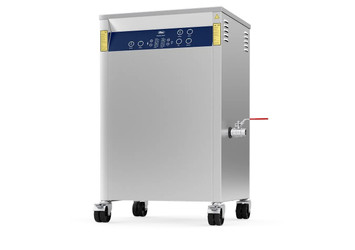
Powerful industrial-scale ultrasonic cleaners operating at a user-selectable 25 or 45 kHz ultrasonic frequency are designed for continuous operation up to 12 hours. They handle cleaning tasks ranging from removing coarse contaminants to delicately cleaning surface coatings.
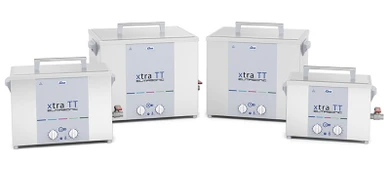
The new Elmasonic X-tra Basic ultrasonic cleaner series, now available from Tovatech, is offered in 6 capacities from 6 to 66 gallons. The strong cleaning action is supported by a Sweep mode that continuously shifts the sound field for more homogenous distribution of ultrasonic cavitation energy throughout the bath, thus optimizing the cleaning results.
Read the rest of this entry »
Written by Rachel Kohn
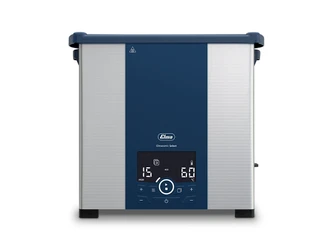
Companies offering contract ultrasonic cleaning services and those using an industrial ultrasonic cleaner as part of their ongoing operations know the importance of efficiency and throughput especially when thoroughly cleaned components are critical to quality control.
A technological breakthrough in ultrasonic cleaner design has been achieved by adding a precise ± 2 cm vertical oscillation of cleaning baskets – a process that improves ultrasonic cavitation action to near perfection. A feature of the new Flex Line of industrial ultrasonic cleaners from Tovatech, it provides 10% – 20% faster cleaning than conventional ultrasonic cleaners. Cleaning with vertical oscillation is more thorough than static cleaning and is preferred for precision cleaning applications where small areas of residual contamination are unacceptable and reduce manufacturing yields.
Read the rest of this entry »
Written by Rachel Kohn
Containers and supports used to hold or suspend parts in an
ultrasonic cleaner should be designed to minimize interference with the cavitation cleaning action. The vast majority of ultrasonic cleaning is done by placing the parts in stainless steel baskets with mesh bottoms. Baskets are suspended on the tank rim or otherwise supported so that parts being cleaned are fully immersed in the ultrasonic cleaning solution. Note that parts should never rest on the bottom of the ultrasonic cleaning tank, nor should baskets unless they are designed to be supported only near the corners of the tank and with rubberized feet to prevent metal-to-metal contact.
Read the rest of this entry »