Why ultrasonic mixing
Ultrasonic cavitation helps mix and encapsulate ingredients more consistently than manual stirring.
Consistent results
Repeatable cycles help standardize DIY batches.
Cleaner workflow
Beakers isolate the recipe while the tank holds only water.
Right-sized kits
Pick beaker volume and batch size that match your output.
Choose your batch size
Liposomal EP10 Kit
Two 600 mL beakers for smaller DIY batches.
- SKU: FSEP10-L
- Makes up to 32 oz
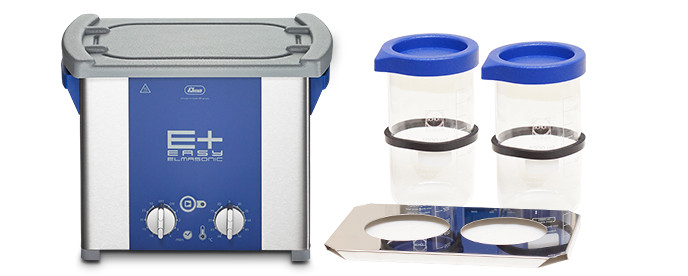
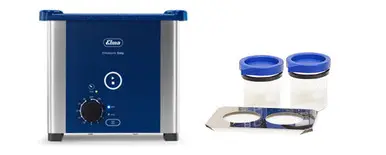
- Elmasonic EP10 base unit
View kit
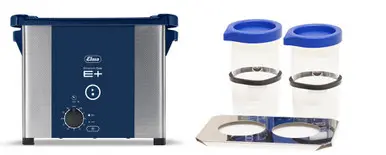
Liposomal EP30 Kit
Two 1000 mL beakers for larger batches.
- SKU: FSEP30-L
- Makes up to 54 oz
- Elmasonic EP30 base unit
View kit
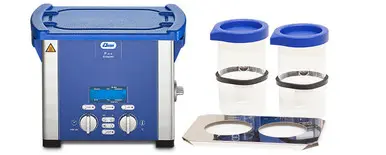
Liposomal P30SE Kit
High power kit to maximize encapsulation efficiency.
- SKU: FSP30SE-L
- Makes up to 54 oz
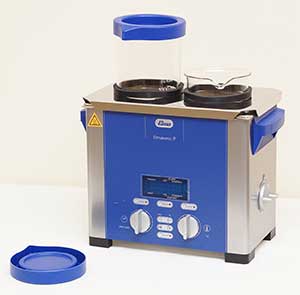
- Elmasonic P30SE base unit
View kit
What is in each kit
Ultrasonic cleaner
Elmasonic base unit sized to match the beakers and batch volume.
Two glass beakers with lids
Keep recipes contained while ultrasonic energy couples through the glass.
Beaker support cover
Suspends beakers in the water bath for even energy transfer.
Simple process overview
1. Prepare your recipe
Fill beakers to the target volume and cover.
2. Fill and degas the bath
Use water in the tank and run a short degas cycle.
3. Run the mixing cycle
Process the batch, then transfer to storage.
Frequently Asked Questions
Which liposomal kit size should I choose?
Select based on target batch size: EP10 kits support smaller batches, while EP30 and P30SE kits support larger-volume production. P30SE offers higher power to maximize encapsulation efficiency.
Do I mix ingredients directly in the ultrasonic tank?
No. Ingredients stay in the included beakers while the tank holds water for ultrasonic energy transfer, keeping the process cleaner and easier to manage.
Is homemade liposomal vitamin C a substitute for store-bought?
Commercial liposomal vitamin C will have better performance and longer shelf life than homemade. Unlike DIY preparation, commercial manufacturing methods control liposome quality and stability.
How can I determine whether my liposomal vitamin C preparation process worked?
Unfortunately, there is no way to accurately measure this outside of a laboratory with professional equipment.
A Note on Home vs. Commercial Production
Although scientific literature supports the use of bath sonication as a liposome preparation technique, commercial liposomal vitamin C is produced with sophisticated manufacturing methods (e.g., high-pressure homogenization, extrusion, or microfluidics) rather than bath sonication to achieve tighter particle-size distributions and more consistent encapsulation.
Tell us your batch size and workflow. We will point you to the right kit.