

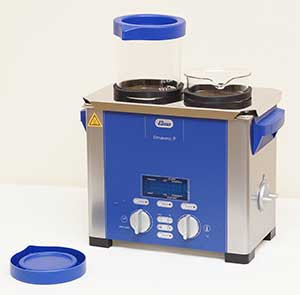
Producing Liposomal Vitamin C in a compact, countertop ultrasonic bath/beaker kit combo helps your body absorb the vitamin's benefits without taking large doses of pills.
A Do-It-Yourself Kit for Fresh Liposomal Vitamin C
Vitamin C – also called ascorbic acid – is an essential nutrient that the body cannot produce itself. It is crucial for synthesizing collagen (vital for skin, joints, and blood vessels), healing wounds, absorbing iron, and neutralizing cell-damaging free radicals. It also supports immune function and acts as a powerful antioxidant.
Liposomal encapsulated vitamin C produced using an ultrasonic bath may offer higher absorption efficiency than taking vitamin C pills. Because liposomal vitamin C has a short shelf life, it is best produced in small batches using ultrasonic bath and beaker kits* described below. But first:
How Ultrasonic Energy Creates Liposomal Vitamin C
-
What Happens?
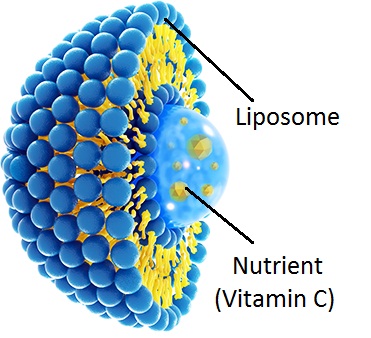
An ultrasonic cleaner uses high-frequency sound waves to create millions of microscopic bubbles in a liquid. When these bubbles rapidly form and collapse, they generate energy that helps surround vitamin C (ascorbic acid) with tiny fat bubbles called liposomes. -
Why Liposomes Matter
The liposomes help protect the vitamin C as it passes through the digestive system. This may allow more vitamin C to reach the bloodstream than the same amount taken as a conventional tablet. -
How It is Made
Many online videos and recipes explain how to prepare liposomal vitamin C at home using an ultrasonic bath. Most use lecithin as the source of the lipids that form the liposomes and ascorbic acid as the vitamin C. -
A typical process:
- Dissolve the lecithin and the ascorbic acid separately in distilled water.
- Combine the two solutions in a high-speed blender.
- Place the mixture in an ultrasonic bath and process it for the time recommended in your recipe.
The ultrasonic energy helps form the liposomes that give liposomal vitamin C its unique properties.
-
Pro Tip: Some videos show processing directly in the ultrasonic
cleaner tank. We recommend processing your mixture in glass beakers. There are
4 reasons for this:
- Beakers allow you to carefully measure batch size
- Ultrasonic energy passes through glass to process the contents
- Beakers are easier to empty and clean after each batch is processed
- Tank processing requires careful, thorough cleaning to avoid batch-to-batch contamination – a procedure that cannot succeed if the tank has a drain.
Ultrasonic Bath Options for DIY Liposomal Vitamin C
Tovatech offers three kits supporting do-it-yourself liposomal vitamin C production. Glass beaker capacities are 600 ml (~2 cups) and 1,000 ml (~4 cups) depending on the kit you choose.
Kits include the ultrasonic unit, 2 beakers and caps, rubber beaker support rings and tank cover.
Beakers are suspended in a water/wetting agent (such as a few drops of liquid dishwashing soap) solution. The rubber rings hold beakers at the correct position in the tank – ideally 1–2 inches above the bottom.
A Four-Step Process to Produce Liposomal Vitamin C
- Add your formula to the beakers
- Loosely cap the beakers and position them in the unit
- Set the Timer (based on recipe and experience)
- Activate the ultrasonic cleaner
Ultrasonic energy passes through the beaker walls to act on the formula. After processing, pour your formula into storage containers, seal and refrigerate.
Equipment Maintenance
When processing liposomal vitamin C using beakers, post-processing tasks are simplified. All you need to do is thoroughly clean your beakers.
After each batch confirm tank solution level reaches the fill line (taking into account displacement by the beakers).
Periodically drain and clean the tank following instructions in the user manual.
Further Reading on Liposomal Vitamin C
Need More Info on Ultrasonic Bath Procedures?
Contact Tovatech's Pros for unbiased advice on selecting the best kit option and help in establishing your operating procedures for producing liposomal vitamin C.