

Learning Center
How to Use an Ultrasonic Cleaner
Read on for important-step-by-step suggestions from the experts on how to get the best performance from your investment in an ultrasonic cleaner.
Tovatech’s PhDs Answer Your Ultrasonic Cleaner “How Do I…?” Questions
A report by Grandview Research states “The global ultrasonic cleaning market size was estimated at USD 1,643.4 million in 2024 and is projected to reach USD 2,472.6 million by 2030, growing at a CAGR of 7.3% from 2025 to 2030.” These projections indicate the broad acceptance of ultrasonic energy as a means to achieve outstanding cleaning results as well as serving as sonicator baths for sample prep in laboratories.
Following are answers to ultrasonic cleaning “How do I” questions received at Tovatech. We’ll start with the basics:
How do I Know Ultrasonic Cleaning Will Do the Job?
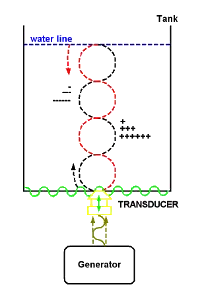
Ultrasonic energy – also described here as cavitation energy – is virtually unsurpassed as a means of quickly and thoroughly removing strongly adhering contaminants from surfaces* that can be safely wetted in an aqueous cleaning solution. The “magic” of ultrasonic energy is that it reaches cracks, crevices, blind holes and other surfaces impossible to access by manual methods. In doing so it substantially reduces or eliminates the need for component disassembly (then re-assembly).
*Soft gemstones, porous or plated items, wood, glued or painted parts are among products that should not be immersed in an ultrasonic bath. If in doubt, contact our scientists.
What Size Ultrasonic Cleaner Should I Specify?
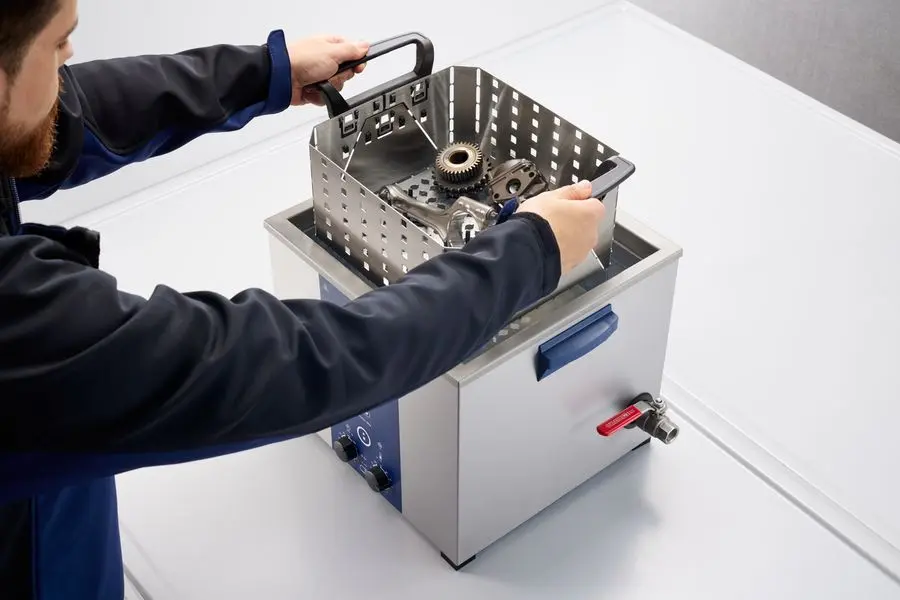
Ultrasonic cleaner “size” is defined by tank volume (amount of cleaning solution it holds) and tank dimensions. In the vast majority of applications* cleaning is accomplished in baskets, the dimensions of which are smaller than tank dimensions. In specifying your equipment, avoid potential parts damage, and unsatisfactory cleaning results, by selecting a unit large enough to avoid stacking parts in baskets. It is better to run more cycles than crowd the basket with parts.
*For industrial applications, very large parts can be suspended from overhead cranes or rest on specially fabricated racks. A variety of accessories are available to suspend or position very small parts in the bath.
How Do I Select the Best Ultrasonic Cleaning Solution?
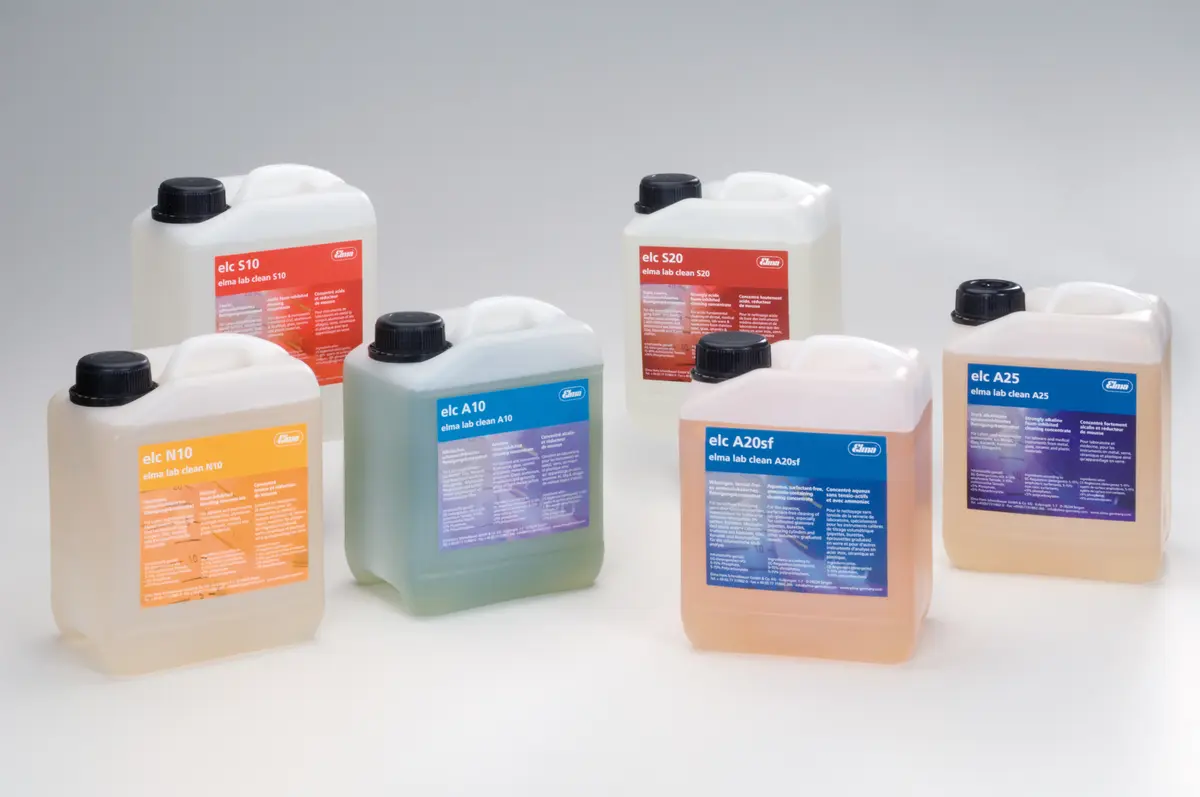
Good question. If you are serious about getting good results for whatever reason cleaning solution selection is a key factor. A variety of biodegradable cleaning solution concentrates* have been formulated to solve specific cleaning challenges. Selecting a cleaning solution formula or formulas to meet your requirement(s) calls for knowing the nature of the contaminant(s), what is being cleaned, and any processing or environmental considerations that come into play.
*Here’s a handy “mixing guide” for common dilutions against a variety of ultrasonic cleaner tank capacities.
Now let’s get into more detail:
How Do I Know When to Start Cleaning?
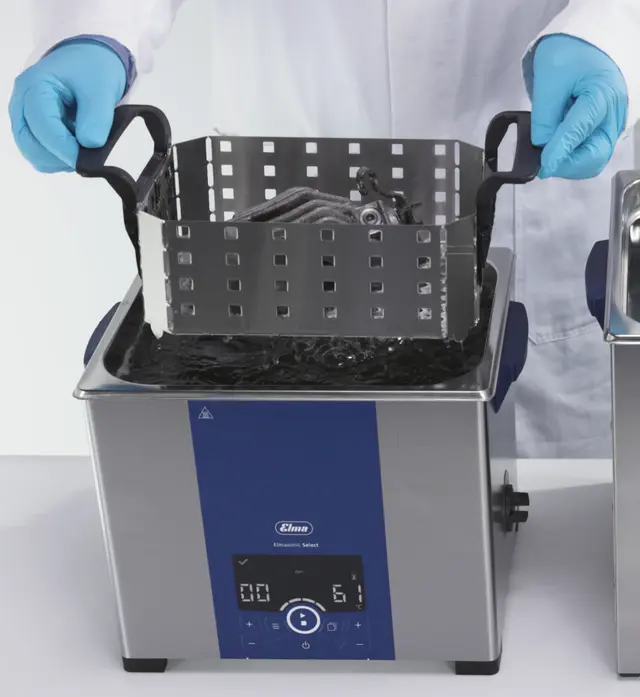
First things first: We suggest filling your tank half-way with water, then add the correct amount of concentrate for a full tank, then add water to the fill line.
Best results are achieved when fresh cleaning solutions are completely degassed and when the bath is at the temperature recommended by the cleaning solution manufacturer. Degassing removes trapped air that interferes with cavitation. The process is demonstrated by bubbles rising to the surface of the solution when the equipment is activated. The process is hastened if your unit has a degas or pulse mode* or by operating it without a load until the bubbles disappear. The procedure also mixes the concentrate with water. Units equipped with heaters* shorten the time to achieve the recommended bath temperature.
*See “How do I Choose Features and Benefits?”
How Do I Know When the Parts are Clean?
First of all you must have a clear definition of “clean” as it applies to your particular application. But in general, inspection is the key; caution is the byword. In some cases, you can observe progress; others require removing the basket for close inspection. Never reach into an operating ultrasonic bath, and use gloves when inspecting as parts may be hot. Over time and with repetitive tasks you’ll gain the experience needed to determine the correct length of commonly employed cleaning cycles.
How Do I Choose Ultrasonic Cleaner Features and Benefits?
Another good question. From automobiles to appliances to whatever, prospective buyers are confronted with selecting “features and benefits” that may or may not prove useful. Ultrasonic cleaners are available from models equipped with a simple “on-off” switch to those offering a variety of features that may prove beneficial in achieving the results you seek in the time you seek.
To help you get through this process, our post on Specifying an Ultrasonic Cleaner covers key areas or our indepth post on features and benefits to consider when making your purchasing decision.
How Can I Extend Ultrasonic Cleaning Solution Life?

First step: Manually remove loose contaminants such as dirt, rust particles, heavy grease and other soils by brushing or by pre-washing with sprays.
Depending on the type of cleaning solution employed, contaminants dissolve or remain in suspension, float to the top, or, in the case of hard particles, fall to the bottom of the tank. Contaminants that float to the top should be skimmed off and set aside on a regular basis*. When cleaning efficiency falls off, it’s time to drain the tank and dispose of the spent solution and skimmed off contaminants following local regulations. Clean the tank following user manual instructions.
*Certain Shiraclean industrial units are equipped with weirs, spray bars and filters to extend solution performance. Elmasonic Xtra ST units offer optional pre- and post-rinsing, and filtration peripherals.
How Do I Check Ultrasonic Cleaner Performance?
Performance checks should be initiated the first time you put your ultrasonic cleaner to work. This gives you a benchmark against which to compare subsequent performance checks. A relatively simple method is with a wattmeter to periodically determine the electrical power consumption of your device*. Two widely used non-medical performance tests – the aluminum foil and pencil tests – are described by scrolling down to “How to Set Ultrasonic Cleaner Performance Benchmarks” in our post Validate Medical Ultrasonic Cleaner Performance.
*Please contact us if you need further information on the wattmeter test.
Can I Fix My Ultrasonic Cleaner Myself?
If your unit is still under warranty, that’s an excellent way to void the warranty! Malfunctioning equipment should be sent to the manufacturer’s authorized service center for repair. If your unit has passed the warranty date you may be able to replace certain components on your own. Spare parts can be ordered and Tovatech’s experts will provide technical guidance. You should never attempt to replace the transducers.
Need More Answers on How to Use an Ultrasonic Cleaner?
Several additional resources are available to help you select, and get the most, from your investment in an ultrasonic cleaner. Whether new to the process, or a pro seeking answers to specific questions, chances are good you’ll find what you need by visiting our ultrasonic cleaning learning center.
Then, contact the scientists at Tovatech for unbiased advice on selecting an ultrasonic cleaner, cleaning solution formulas, accessories and operating procedures geared to solving your tough cleaning challenges.