A Guide to Understanding Weighing Mechanisms

May 24th, 2012

Lady Justice and her Scale

Lady Justice and her Scale


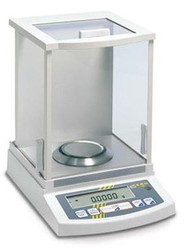
If you’ve ever wondered how scales weigh, here’s some useful information.  Even if you never wondered how scales weigh read on to arm yourself with a great cocktail party conversation starter on weighing mechanisms.

In the old days scales weighed by putting the substance to be weighed on one side of a balance and known weights on the other. Picture the scale held by Lady Justice.  These were accurate to the degree of the known weight accuracy.  That criterion, the accuracy of the known weight, figures prominently in today’s digital scales, analytical balances, laboratory scales, moisture analyzers and industrial scales such as offered by Tovatech.  For more details on the importance of weighing accuracy we direct you to our blog post on scale calibration.

Now, back to the conversation starter:

Types of Weighing Mechanisms

We’ll look at four types of weighing mechanisms:  Strain Gauge, Force Compensation, Tuning Fork, and Single Cell Technology.

Strain Gauge Technology also known as force technology derives the weight by the mechanical deformation of an electrical resistor strip glued to an aluminum/steel deforming body.  When the material being weighed is applied to the scale the change in resistance value during deformation allows the measured value to be calculated by special resistors mounted on the load cell.  Strain gauge technology is a widely used as a weighing measurement sensor.  It has the advantage of low cost and a good reputation in the weighing measurement industry.

Electromagnetic Force Compensation   A counterforce created by means of a current-carrying coil in a permanent magnet is the same as the substance in the weighing pan attached to a central core  surrounded by the magnet. The measured value is created by a change in the coil current.  Electromagnetic balances are suited for high-resolution weighing but care must be taken to avoid temperature changes or exposure to magnetic forces.

Tuning Fork Technology weighs by an electromagnetically excited resonating body that oscillates.  The principle is much like tuning forks used by piano tuners because of their stability and accuracy. The change in the frequency of vibration corresponds to the load on the scale, and yields the measured value. 

Single Cell Technology utilizes a load cell formed from a single piece of aluminum fabricated by electromagnetic discharge machining to deliver a uniform thermal response.  Accuracy is enhanced because the technique eliminates component adjustments and torque loads in assembled systems such as fasteners. Advantages include short stabilization time, high corner load performance and stable temperature behavior.  Balances with single cell technology are also more shock resistant than those with multiple component weighing mechanisms.

Contact the scientists at Tovatech for information on a full range of precision scales, analytical balances, laboratory scales, moisture analyzers and industrial scales.


    Read more articles about : Analytical Balance, Digital Scale, Lab Scale.

    Have Questions? Ask Us Now

    1. Request Quote

    Assured response within one business day

    2 Comments to A Guide to Understanding Weighing Mechanisms

    1. A Guide to Understanding Weighing Mechanisms | Comparescales.com on May 24th, 2012

      [...] more from the original source: A Guide to Understanding Weighing Mechanisms This entry was posted in Industrial Scales and tagged analytical-balances-, brief-explanation, [...]

    2. A Guide to Understanding Weighing Mechanisms | Industrial Scales and Weighing Systems on May 24th, 2012

      [...] Read more here: A Guide to Understanding Weighing Mechanisms [...]

    Leave a comment

    phone

    (862) 233-2740

    Have questions?
    Ask us Now!

    Assured response within one business day

    Have questions?
    Ask us Now!

    Assured response within one business day

                Rss Feed
    Follow Us