

Think about doing the dishes after a massive family dinner. If you try to wash a greasy bacon skillet with freezing cold water, you're going to have a bad time.
Hot, soapy water cuts through grease like magic. The same exact rule applies to high-tech industrial cleaning.
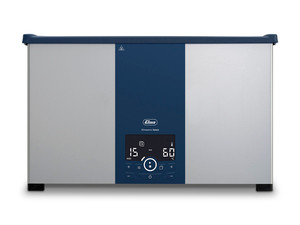
When you are trying to scrub heavy grease, baked-on carbon, or oily residues off engine parts and manufacturing molds, a heated ultrasonic cleaner is your best friend. But how does heat actually affect the cleaning process, and can a machine get too hot? Let’s dive into the science.
The "Big Four" of Ultrasonic Cleaning
If you want to get a part perfectly clean, you have to balance four main ingredients:
- Cleaning Chemicals: The type of soap or solvent you use.
- Time: How long the ultrasonic cleaning process runs.
- Physical Energy: The frequency and power of the ultrasonic waves.
- Temperature: How hot the liquid gets.
While the right chemicals and time matter, temperature is also key. Most cleaning solution manufacturers will tell you what temperature range works best for their formula. For instance, a popular cleaner called Elma tec clean A4 operates best between 50°C and 80°C.
The Accidental Heater: How the Machine Makes Its Own Heat
Many ultrasonic cleaners come with built-in heaters to get the liquid up to temperature fast. But even when the heater is off, the machine actually heats itself up just by running.
Inside the cleaner, parts called transducers vibrate the tank bottom at incredibly high speeds. This vibration creates billions of microscopic vacuum bubbles. When these bubbles hit a surface, they violently collapse (implode) in a process called cavitation.
Fun Fact: The inside of a collapsing cavitation bubble can briefly hit temperatures of 5,000°C! Because the bubbles are so tiny, that heat spreads out instantly, but over a long cleaning cycle, all those mini-explosions can heat the liquid all on their own.
Safety Note: Because of this intense localized energy and heat, never stick your bare hands into an operating ultrasonic bath!
The Catch: More Heat is Not Always Better
You might think, "If heat is good, making it boiling hot must be amazing!" Not quite.
While heat makes the chemical soap work better, it actually weakens the ultrasonic waves. As the liquid gets closer to its boiling point, those tiny vacuum bubbles fill up with vapor. This vapor cushion stops them from violently collapsing and blasting away dirt.
If the bubbles don't implode, the ultrasonic cleaning stops. That’s why most high-quality cleaners cap their thermostats at 80°C (176°F).
The Exceptions
There are always a few rule-breakers. Highly caustic cleaners used for heavy-duty iron and steel can handle higher heat. For example, cleaning jet engine fuel injectors requires blasting them at 90°C for an hour.
When to Turn the Heat Completely Off
Heat is awesome for grease, but it can absolutely ruin other jobs. Here is when you should turn the heater off (or even use cooling coils):
- Medical and Surgical Tools: Blood and biological tissue should never be cleaned in liquid above 40°C (104°F). Why? Because heat cooks the protein in blood, hardening it like an egg and making it much harder to remove.
- Electronics: High heat can warp printed circuit boards and ruin delicate components.
- Flammable Solvents: If you are cleaning with volatile chemicals, adding heat is a major fire hazard. Read about safe methods of cleaning with solvents.
Wrap-Up
Finding the perfect temperature is a balancing act between your cleaning solution, the object you're cleaning, and the type of grime you're fighting.
If you're stuck on a tough cleaning challenge and aren't sure how much heat to apply, don't guess! Reach out to the scientists at Tovatech. They can help you dial in the perfect settings to get your parts looking brand new.