Ultrasonic Cleaning Solutions

Ultrasonic Cleaning Solutions

Premium biodegradable cleaning chemistry for every application and material type.

Ultrasonic cleaning solutions
  • Premium biodegradable cleaning chemistry for every application
  • material type
  • Cleaning

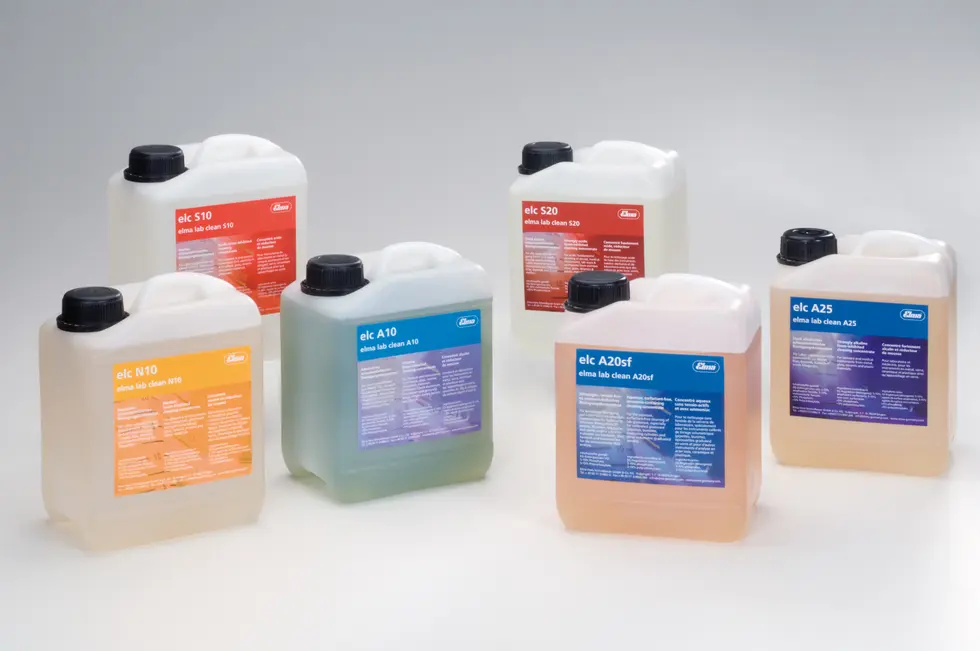
Selecting the correct ultrasonic cleaner solution is as critical as selecting the right equipment. Your choice is based on what you're cleaning and the type of contaminants being removed. We stock premium biodegradable concentrates-a far cry from chemistries of the past that posed health and disposal concerns.

Ultrasonic Cleaning Solutions and Applications

Equipment and chemistry decisions can be made in parallel: the ultrasonic cleaner you use does not limit the ultrasonic cleaning liquid you choose. The choice depends on what you are cleaning and the contaminants being removed. If you are unfamiliar with the process, review how ultrasonic cleaning works.

Cleaning Solution Quick Reference

Compare our most-used concentrates by application, contaminant, and recommended dilution.

Product name Parts to clean For removal of Dilute to
Elma tec clean A4 Engine parts, all metals, glass, ceramics, plastics, rubber Oil, grease, combustion residues, soot, dust, other organic contamination 2-5%
Elma tec clean A1 Electronics, PCBs, electromechanical components, fine optics Flux residues, polishing suspensions, grease, oil, dust, fingerprints 3-10%
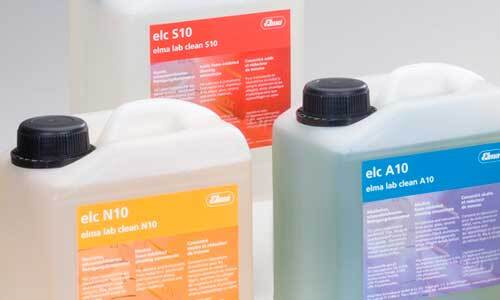
Elma Lab Clean N10 Delicate instruments & labware of metals, light metals, glass, ceramics, plastics Emulsions, residues of markings & labels, lime soaps, light greases & oils, fingerprints, dust 2%
Elma tec clean S1 Non-ferrous & light metals, PCBs, stainless steel, glass, plastics Mineral deposits, oxide layers, rust, lime; polishing media, mineral grease, oil 1-5%
Elma tec clean A2 Ferrous & non-ferrous metals, precious metals, glass; brighten brass & copper Oil, fat, grease, sweat, oxides, buffing compounds 3-5%
Elma tec clean N1 Gentle cleaning of metals, plastics, ceramics, glass, rubber, jewelry Oils, greases, grinding, lapping, polishing residues, dust, fingerprints 5%
CLN-SC75 Spray gun parts and tools, brass, stainless steel Polyurea, polyurethane, epoxies, resins, water- or oil-based paints 50% to full strength
JewelryClean S8 Silver, platinum, jewelry, gems Dirt, grease, buffing compounds, rouge, tripoli, oxides 2-5%
Elma clean 260 (ec 260 d&s) Aluminum, laser-machined parts, light metal alloys; glassy, ceramic and mineral surfaces, plastics Aqueous cooling emulsions, greases, oils, fingerprints, dust, lime soaps 2%
Mold Release Steel molds, injection molding tools Burnt-on plastic and rubber 50% to full strength
Elma tec clean KS Steel, gray cast iron, hard metals Prevents corrosion of metals during/after aqueous cleaning 0.05-0.5%
Shellac Buster Heavily soiled carburetors, engine parts, production equipment, tools, mixing vats, tanks, drums Carbon, varnish, shellac, rust, printing inks, paints, adhesives, powder coatings, grease, oil Full Strength
GunClean L6 Guns, rifles, aluminum parts Carbon, oil, grease, dirt 10%
GunLube L5 Lubricates guns, rifles, bicycle parts   Full Strength
Hydro-Sonic Non-ammoniated Heavily soiled metal parts, printing plates Ink, dyes, grease, heavy soils, varnish Makes 8 gallons of solution per bottle
NTB-100 Carbon steel, aluminum, brass parts; coating equipment, spray guns Epoxy resins, adhesives, lacquer coatings, 2-part ISO polyurea coatings 50% to full strength
Medclean C7 Medical and dental instruments Blood, tissue, ointments, bodily excretions 1-3%

Types of Ultrasonic Cleaning Solutions

Overview

Most ultrasonic cleaning solutions (also called soaps, chemicals, detergents) are water-based biodegradable concentrates—though some are used full strength. Modern formulations avoid legacy chemistries that created health and disposal challenges.

Classification by pH (acidity/alkalinity)

  • Alkaline (>7): e.g., Elma tec clean A4, a demulsifying solution for oil, grease, soot, coking, forge dust, fingerprints.
  • Acidic (<7): e.g., Elma tec clean S1, a demulsifying cleaner for rust, lime, oxide films, grease, oil on nonferrous metals.
  • Neutral (~7): e.g., Elma Lab Clean N10, a demulsifying formula safe for metals, plastics, ceramics, glass, and rubber.

Classification by contaminant handling

  • Emulsifying formulations: Keep oily contaminants in suspension; best for low-volume cleaning. Performance declines as soils build up.
  • Demulsifying formulations: Allow oils to float for skimming, extending bath life; preferred for high-volume or continuous use.

In both cases, hard particles settle to the bottom of the tank and should be removed when solutions are changed.

Optimizing Ultrasonic Cleaner Solution Use

Manufacturers provide detailed instructions on the ultrasonic cleaner solution use. Here are some examples:

Dilution

Always follow the manufacturer's specified dilution recommendation (such as diluting to 5 to 10 percent with water) for optimal cleaning performance and cost-effectiveness. Increasing the concentration does not typically improve cleaning.

Degassing

Fresh cleaning solutions contain trapped air that inhibits the cleaning action. Remove it by activating your unit’s degas mode (if so equipped). Otherwise operate the unit without a load for about 20 minutes.

Temperature

Using the liquid at the specified temperature is crucial as it enhances the cleaning power of the solution. Ultrasonic cleaners equipped with heaters shorten times needed to bring solutions to the recommended temperature.

Acid Safety

If strongly acidic solutions are used, the stainless-steel tank must be protected by using an acid-resistant tub insert sized for the unit you are using. The tank should contain tap water and a surfactant such as a few drops of liquid dishwashing detergent. Ultrasonic energy passes through the insert walls to act on parts.

SDS

Safety Data Sheets (SDS) detail the chemistry, safe handling, and proper disposal procedures for the ultrasonic cleaner solution.

Economy

As noted above contaminants removed during cleaning remain in the solution or fall to the bottom of the cleaning tank. To get the most out of your cleaning solution investment see our tips on Extending Cleaning Solution Performance.

Solution Selection Guidance

Dilution Matters

Most solutions are concentrated and must be diluted before use. Recommended dilution ratios range from 0.05% to full strength depending on solution type, contamination type and material being cleaned.

Temperature & Safety

Manufacturers provide detailed instructions on dilution, recommended cleaning temperatures, and Safety Data Sheets (SDS, formerly MSDS) detailing chemistry, handling, and disposal procedures.

Acidic Solution Protection

When using strong acids, protect stainless steel tanks with an acid-resistant tub. The tub is inserted into an ultrasonic tank containing tap water and surfactant.

Proper Disposal

Although most ultrasonic cleaning solutions are biodegradable, waste solutions contain contaminants and must be disposed of properly. Consult local environmental regulations.

Extended Bath Life

Filtration and oil skimming equipment extend cleaning solution life by removing contaminants, reducing operating costs and environmental impact.

Material Compatibility

Check parts to be cleaned for compatibility with cleaning solutions. When cleaning very sensitive materials select a neutral solution such as Elma lab clean N10. Most cleaning solutions have technical data sheets that list suitable substrates to be cleaned.

FAQs: Ultrasonic Cleaning Solutions

What ultrasonic cleaning solution should I use?

Choose by material and contaminant. Match chemistry to what is on the part (oil, carbon, oxide, flux, biological residue) and verify compatibility with the substrate.

Can I use plain water in an ultrasonic cleaner?

For light soils, sometimes. For production cleaning, a purpose-formulated solution is usually required for wetting, soil lift, and repeatable results.

How do I choose alkaline, acidic, or neutral chemistry?

Alkaline chemistries are commonly used for oils and grease, acidic for oxide, rust, and mineral films, and neutral for mixed-material sensitivity. Confirm with technical data and SDS.

What dilution ratio should I use?

Use the manufacturer’s recommended range. Over-concentration can increase cost, residue, and rinse load.

What temperature is best for ultrasonic cleaning solutions?

Use the chemistry’s specified temperature window. Warmer baths often improve cleaning speed, but excessive heat can damage parts or coatings. Heat also decreases cavitation efficiency.

Why should I degas a fresh bath?

Freshly mixed solutions hold dispersed and dissolved air that inhibit cavitation. Degassing before production cycles improves consistency and cleaning performance.

How do I know when to change the bath?

Change when cleaning time increases, parts come out inconsistent, the bath is visibly loaded (cloudy, oily, particulate), or quality limits are missed.

Can I mix different ultrasonic cleaning chemicals?

No, not unless explicitly approved by the manufacturer. Mixing can reduce performance, create residue, or introduce safety and compliance issues.

Are flammable solvents safe in any ultrasonic cleaner?

No. A conventional ultrasonic cleaner should never be filled with a liquid that has a flash point. Flammable solvents require properly rated systems, containment, ventilation, and EHS controls. See/cleaning-with-flammable-solvents/.

How should spent ultrasonic solution be handled?

Treat disposal as a compliance task. Follow SDS guidance plus site, local, and federal disposal requirements based on both chemistry and removed contaminants.

Not sure which cleaning solution fits your application?

Tell us your materials, contaminants, and cleaner model. We'll recommend the right solution, concentration, and temperature for your process.

Compare Selected