

Shop Talk with Tovatech’s PhDs
Answers to Top Questions on Ultrasonic Cleaner Features
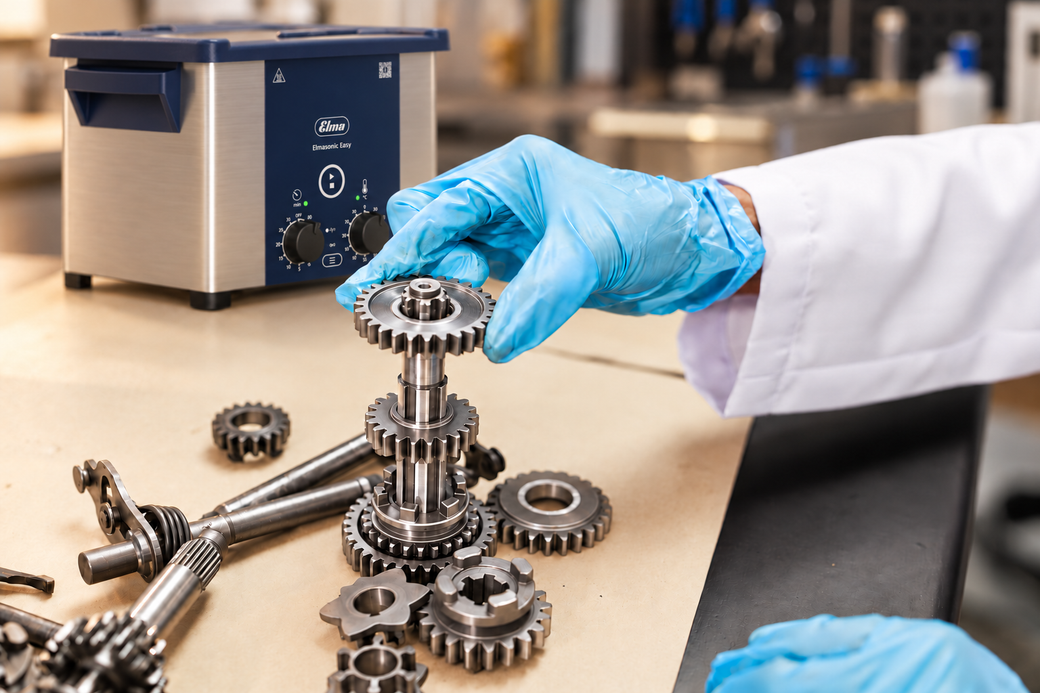
As with vehicles and appliances, purchasers of ultrasonic cleaners make decisions on what features make the most sense based on specific requirements. This post addresses some questions Tovatech’s PhDs get from manufacturers, shop owners, mechanics, and engineers looking answers on ultrasonic parts cleaning.
How Do I Pick the Right-Sized Unit?
This is a high-ranking question, and yes, size is a feature.
Generally, the larger the unit the higher the cost, but the cost of picking one too small could be measured in future lost business opportunities.
Ultrasonic cleaner size is based on tank dimensions and tank volume in cleaning solution capacity. Tank dimensions are important, but because cleaning is accomplished in baskets, basket dimensions are key. Basket dimensions are smaller than tank dimensions.
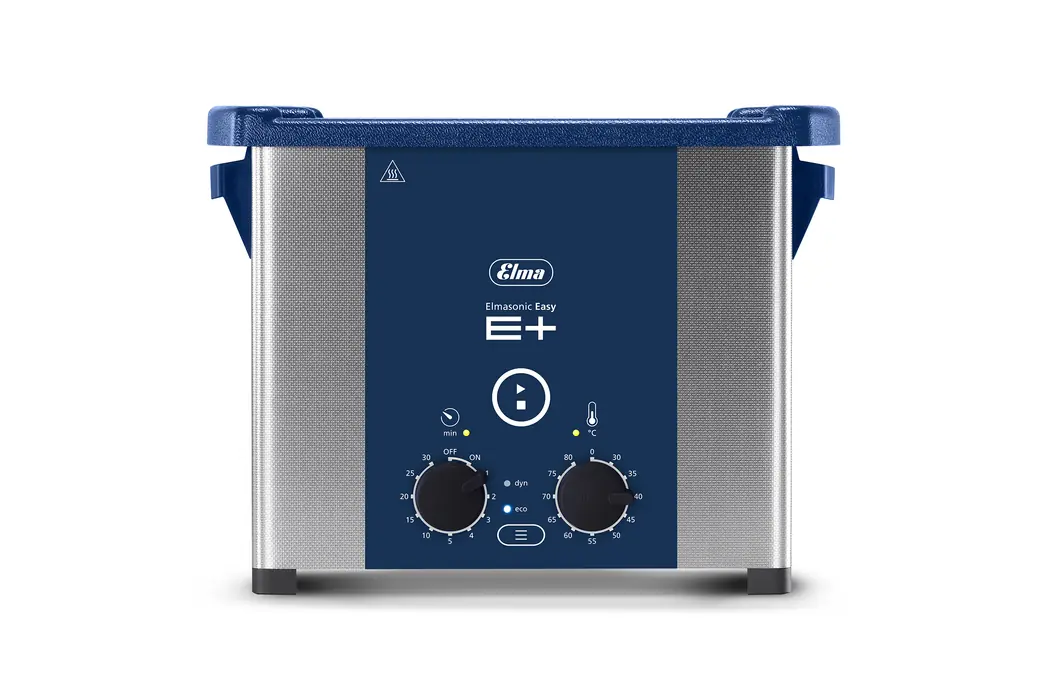
Example: Our entry-level Elmasonic E Plus Series’ 0.75 gallon Elmasonic EP30H has internal tank dimensions 9.4 x 5.4 x 3.9 inches (L x W x H) and basket dimensions 7.7 x 4.1 x 2.0 in. Tank and recommended basket dimensions are provided for all 9 offerings in this line.
So, to answer your question: Know the size(s) of the part(s) you will be placing in the basket without crowding. Crowding reduces cleaning efficiency and can damage parts, especially delicate parts or those with highly finished surfaces.
Pro Tip: If you have questions about baskets, check our video “Why Use Parts Baskets?”
What Ultrasonic Frequency Should I Use?
As with cleaning solution formulas, selecting an ultrasonic frequency depends on the items being cleaned and what is being removed.
For example, coarse cleaning to remove heavy contaminants is generally best performed at lower frequencies such as 37 kHz because it delivers stronger cleaning action.
Fine cleaning, which may be required for delicate parts or highly finished surfaces, calls for higher frequencies such as 80 kHz. Higher frequency cleaning is suggested for penetrating blind holes, threads, tight crevices and tubes.
It is not unusual for us to get asked about jobs requiring both coarse and fine cleaning on the same part.
In such cases, we suggest a dual-frequency ultrasonic cleaner in the Elmasonic P series, offering both 37 and 80 kHz.
These units, offered in 7 tank capacities from 0.75 to 7.5 gallons, can be programmed to operate at either frequency or automatically alternate between the two. They also have higher average and peak ultrasonic power than any ultrasonic bath on the market. For more on these topics see ultrasonic frequency and power.
What’s the Best Cleaning Solution Formula?
This also ranks high in the questions we get. (We think it relates to the confusing array of comments and suggestions found on discussion forums related to ultrasonic cleaning and parts cleaning in general.)
The correct cleaning solution formula makes the difference between desired results and results that are not-so-desirable. Most cleaning solutions are offered as biodegradable concentrates formulated for specific cleaning tasks.
Pro Tip: To select the best cleaning solution formula, you need to know three things:
- The nature of the contaminant – what are you trying to remove
- The material being cleaned – what is it made of – and
- Process and environmental requirements
Because there is no quick answer to this question, we suggest you read How to Select the Best Ultrasonic Cleaning Solution and view our video on choosing cleaning solutions.
What’s Ultrasonic Cleaner Degassing? Is It Important?
Degassing is a fancy word for removing trapped air from fresh ultrasonic cleaning solutions. That liquids contain air is demonstrated by leaving a glass of water on your nightstand and seeing bubbles on the inside surface of the glass in the morning.
Trapped air reduces ultrasonic cleaning efficiency. Units equipped with a Degas Mode (see below under “Ultrasonic Cleaner Bells and Whistles”) speed removal by an off-on process demonstrated in our video How to Degas an Ultrasonic Cleaner.
An alternate means is activating what is called a Dynamic Mode (also described below).
Absent programmable options, operate the unit without a load until air bubbles cease to rise to the surface. Keep in mind, though, that the larger your unit in terms of cleaning solution capacity, the longer it takes to remove trapped air from fresh cleaning solutions.
When Should I Replace My Ultrasonic Cleaning Solution?
First a quick tutorial on where the contaminants go:
Hard contaminants fall to the bottom of the tank and if allowed to remain can cause irreparable damage.
Demulsifying cleaning solution formulations allow oily contaminants to float to the surface while emulsifying formulations keep contaminants in the solution. (See “Major Categories” in How to Select the Best Ultrasonic Cleaning Solution).
Regardless of the formula, tank capacity*, extent of operation, or manually removing floating contaminants, eventually cleaning efficiency will decline. Then it is time to drain and discard spent solutions along with skimmed off contaminants according to local regulations.
When that time comes take the time to clean your ultrasonic cleaner tank following the manufacturer's instructions. Prepare and degas fresh solution and you're ready to resume cleaning.
*Large-capacity industrial cleaners such as the dual-frequency Elmasonic Xtra ST series can be equipped with an optional filtering system that helps extend cleaning solution life.
What Ultrasonic Cleaner “Bells and Whistles” Make Sense?
Repeating our opening statement, purchasers of ultrasonic cleaners make decisions on what features make the most sense based on specific requirements. The following table offers a brief description of features that can be useful. Product pages on benchtop ultrasonic cleaners include features that apply to each line. For more comprehensive descriptions see our post Ultrasonic Cleaner Benefits and Features.
| Benefit | Feature |
|---|---|
| Timed Cycles with Auto Shut-Off | Digital Timer |
| Degas Fresh Cleaning Solutions | Degas Mode |
| Bring Solutions to Recommended Temperature | Heater |
| Ease Solution Replacement | Drain |
| Promote Uniform Cleaning | Sweep Mode |
| Dislodge Tenacious Contaminants | Pulse Mode |
| Optimize Cleaning Performance/Degas | Dynamic Mode Combines Sweep and Pulse |
| Auto Adjust for Light to Heavy Loads | Power Tracking |
| Handle Coarse and Fine Cleaning Challenges | Dual-Frequency Units |
| Facilitate Multiple Repetitive Tasks | Programmable Cleaning Cycles |
| Reduced Power for Quiet, Delicate Cleaning | Eco Mode |
| Set Intensity to Match Part Properties | Variable Power |
What’s The Best Way to Maintain My Ultrasonic Cleaner?
Protect your ultrasonic cleaner investment by draining and properly discarding spent cleaning solutions. Clean the tank following instructions in the user manual. Take the time to carefully inspect your unit and note anything unusual. Key issues that can occur, and corrective steps, are provided in our post Ultrasonic Cleaner Maintenance: 4 Key Tips.
Do You Have More Questions on Ultrasonic Cleaners in the Shop?
Several online resources are available addressing the selection and use of ultrasonic cleaners. These include:
- Answers to Ultrasonic Cleaner FAQs
- How Ultrasonic Cleaners Work
- Ultrasonic Cleaning Terminology
- Useful Accessories to Boost Cleaning Efficiency
Then contact the scientists at Tovatech for professional, unbiased advice on selecting an ultrasonic cleaner, cleaning solution formulas and operating suggestions to get the most from your investment.